 Add to Chrome
 Add to Firefox
 Add to Edge
Coarse-to-Fine Compositional Diffusion for Long-Horizon Planning
May 30, 2026
Diffusion models provide strong priors for generating structured data, but many tasks require outputs beyond the scale on which these models are typically trained. Compositional generation addresses this by composing overlapping local plans from a pretrained short-horizon prior into a long-horizon output. However, standard composition primarily enforces agreement between neighboring local plans, yielding local consistency without directly specifying the global structure of the full composition. As a result, locally compatible plans may still form an implausible route, task sequence, or temporal evolution. Existing methods improve global coherence by repeatedly propagating local consistency signals or by adding inference-time optimization, but these procedures become expensive as the number or dimensionality of local plans increases. We propose Coarse-to-Fine Compositional Diffusion (CoFi), an inference-time sampler that separates global structure formation from local detail refinement. CoFi first aligns local denoised estimates around a shared coarse structure, producing a global scaffold that captures the long-range task-level arrangement. It then diffuses this scaffold to an intermediate noise level and denoises it with the same pretrained local prior, restoring local fine structure while preserving the scaffold-induced global coherence. Across long-horizon robotic planning, panoramic image generation, and long video generation, CoFi not only improves both global coherence and local sample quality over prior compositional baselines, but also requires 2-8x fewer denoiser evaluations.

Riemannian Diffusion Models on General Manifolds via Physics-Informed Neural Networks
May 29, 2026Riemannian diffusion models generalize score-based generative modeling to manifold-supported data via stochastic diffusion equations on the manifold. However, training requires sampling from and differentiating the manifold heat kernel, which is rarely available in closed form beyond a few highly symmetric manifolds. We propose a general approach that approximates the heat kernel by directly solving the manifold heat equation with a physics-informed neural network (PINN). Given an explicit manifold specification, we choose a coordinate system, derive the corresponding heat (Fokker--Planck) equation and a short-time asymptotic approximation, and then train a PINN to learn the log heat kernel. The resulting surrogate enables both forward noising (heat-kernel sampling) and conditional-score evaluation for denoising score matching. We demonstrate the method on diverse manifolds including $S^2$, $SO(3)$, $\mathrm{SPD}(n)$, and permutation-quotiented point clouds.
Permutation-Symmetrized Diffusion for Unconditional Molecular Generation
Mar 24, 2026Permutation invariance is fundamental in molecular point-cloud generation, yet most diffusion models enforce it indirectly via permutation-equivariant networks on an ordered space. We propose to model diffusion directly on the quotient manifold $\tilde{\calX}=\sR^{d\times N}/S_N$, where all atom permutations are identified. We show that the heat kernel on $\tilde{\calX}$ admits an explicit expression as a sum of Euclidean heat kernels over permutations, which clarifies how diffusion on the quotient differs from ordered-particle diffusion. Training requires a permutation-symmetrized score involving an intractable sum over $S_N$; we derive an expectation form over a posterior on permutations and approximate it using MCMC in permutation space. We evaluate on unconditional 3D molecule generation on QM9 under the EQGAT-Diff protocol, using SemlaFlow-style backbone and treating all variables continuously. The results demonstrate that quotient-based permutation symmetrization is practical and yields competitive generation quality with improved efficiency.
Extreme-MIMO Field Trials in 7 GHz Band: Unlocking the Potential of New Spectrum for 6G
Mar 23, 2026The frequency range around 7 GHz has emerged as a promising upper mid-band spectrum for 6th generation (6G), offering a practical balance between coverage and capacity. To fully exploit this band, however, future systems require substantially stronger beamforming and spatial multiplexing capability than today's 5G 64-port commercial deployments. This article investigates extreme multiple-input multiple-output (X-MIMO) with 256 digital ports as a practical 6G architecture for 7 GHz operation. First, through system-level simulations, we examine the throughput benefits and design trade-offs of increasing the number of base station (BS) and user equipment (UE) digital antenna ports, including comparisons between 128-port and 256-port configurations. We then present a 256-port 7 GHz BS and UE prototype and report field-trial results obtained in urban outdoor environments. The measurements demonstrate the feasibility of 8-layer downlink single-user MIMO over a 100 MHz bandwidth, achieving more than 3 Gbps for a single user under urban outdoor propagation conditions. Channel analysis based on measured data further suggests how the large digital aperture of X-MIMO supports high-order spatial multiplexing even with limited dominant angular clusters. Finally, we identify key challenges and outline research directions toward practical deployment of 7 GHz X-MIMO systems for 6G.
ForestPersons: A Large-Scale Dataset for Under-Canopy Missing Person Detection
Mar 03, 2026Detecting missing persons in forest environments remains a challenge, as dense canopy cover often conceals individuals from detection in top-down or oblique aerial imagery typically captured by Unmanned Aerial Vehicles (UAVs). While UAVs are effective for covering large, inaccessible areas, their aerial perspectives often miss critical visual cues beneath the forest canopy. This limitation underscores the need for under-canopy perspectives better suited for detecting missing persons in such environments. To address this gap, we introduce ForestPersons, a novel large-scale dataset specifically designed for under-canopy person detection. ForestPersons contains 96,482 images and 204,078 annotations collected under diverse environmental and temporal conditions. Each annotation includes a bounding box, pose, and visibility label for occlusion-aware analysis. ForestPersons provides ground-level and low-altitude perspectives that closely reflect the visual conditions encountered by Micro Aerial Vehicles (MAVs) during forest Search and Rescue (SAR) missions. Our baseline evaluations reveal that standard object detection models, trained on prior large-scale object detection datasets or SAR-oriented datasets, show limited performance on ForestPersons. This indicates that prior benchmarks are not well aligned with the challenges of missing person detection under the forest canopy. We offer this benchmark to support advanced person detection capabilities in real-world SAR scenarios. The dataset is publicly available at https://huggingface.co/datasets/etri/ForestPersons.
Parallel Test-Time Scaling with Multi-Sequence Verifiers
Mar 03, 2026Parallel test-time scaling, which generates multiple candidate solutions for a single problem, is a powerful technique for improving large language model performance. However, it is hindered by two key bottlenecks: accurately selecting the correct solution from the candidate pool, and the high inference latency from generating many full solutions. We argue that both challenges are fundamentally linked to verifier calibration. A well-calibrated verifier not only improves answer selection, but also enables early-stopping strategies to reduce latency. However, existing verifiers are limited as they score each candidate in isolation, overlooking rich contextual information across the set of candidates. To address this, we introduce the Multi-Sequence Verifier (MSV), the first verifier designed to jointly process all candidate solutions and model their interactions. MSV achieves improved calibration, which directly enhances best-of-N selection performance. We further introduce a streaming MSV variant that empowers a novel early-stopping framework. Our novel framework fully leverages parallel decoding, which contrasts with the existing multi-sequence early exit works that decode sequences one by one and thus incur significant latency. In this novel setting, MSV can achieve the same target accuracy with around half the latency that would be required with its counterpart that scores each solution in isolation.
Mitigating Legibility Tax with Decoupled Prover-Verifier Games
Feb 26, 2026As large language models become increasingly capable, it is critical that their outputs can be easily checked by less capable systems. Prover-verifier games can be used to improve checkability of model outputs, but display a degradation in accuracy compared to a baseline trained only to maximize correctness -- a phenonemon named legibility tax. We propose a solution by decoupling the correctness from the checkability condition and instead training a "translator" model that turns a fixed solver model's solution into a checkable form. This allows us to first train the solver to maximize correctness, and then train the translator to translate the solver into a checkable form while retaining the solver's answer. To accommodate this new objective of translation, we formulate a decoupled prover-verifier game where the equilibria correspond to faithful and checkable translators.
A Model-Free Universal AI
Feb 26, 2026In general reinforcement learning, all established optimal agents, including AIXI, are model-based, explicitly maintaining and using environment models. This paper introduces Universal AI with Q-Induction (AIQI), the first model-free agent proven to be asymptotically $\varepsilon$-optimal in general RL. AIQI performs universal induction over distributional action-value functions, instead of policies or environments like previous works. Under a grain of truth condition, we prove that AIQI is strong asymptotically $\varepsilon$-optimal and asymptotically $\varepsilon$-Bayes-optimal. Our results significantly expand the diversity of known universal agents.
Learning from Neighbors with PHIBP: Predicting Infectious Disease Dynamics in Data-Sparse Environments
Dec 24, 2025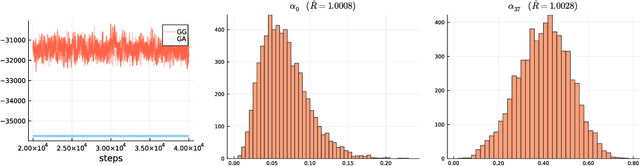
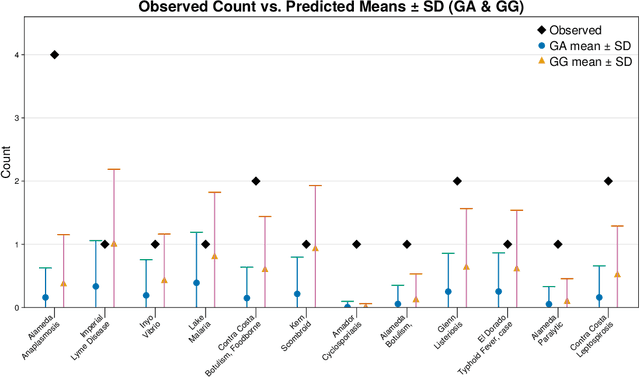
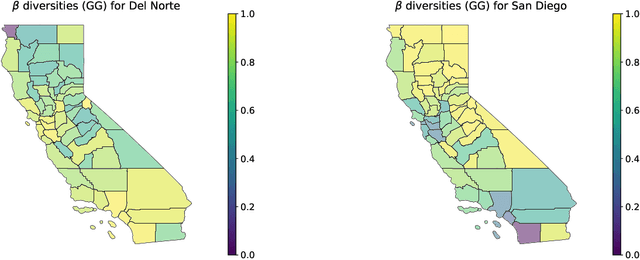
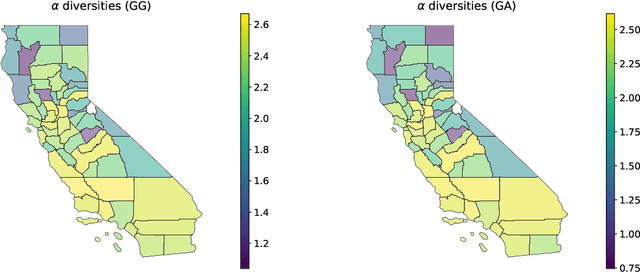
Modeling sparse count data, which arise across numerous scientific fields, presents significant statistical challenges. This chapter addresses these challenges in the context of infectious disease prediction, with a focus on predicting outbreaks in geographic regions that have historically reported zero cases. To this end, we present the detailed computational framework and experimental application of the Poisson Hierarchical Indian Buffet Process (PHIBP), with demonstrated success in handling sparse count data in microbiome and ecological studies. The PHIBP's architecture, grounded in the concept of absolute abundance, systematically borrows statistical strength from related regions and circumvents the known sensitivities of relative-rate methods to zero counts. Through a series of experiments on infectious disease data, we show that this principled approach provides a robust foundation for generating coherent predictive distributions and for the effective use of comparative measures such as alpha and beta diversity. The chapter's emphasis on algorithmic implementation and experimental results confirms that this unified framework delivers both accurate outbreak predictions and meaningful epidemiological insights in data-sparse settings.
Compact Memory for Continual Logistic Regression
Nov 12, 2025Despite recent progress, continual learning still does not match the performance of batch training. To avoid catastrophic forgetting, we need to build compact memory of essential past knowledge, but no clear solution has yet emerged, even for shallow neural networks with just one or two layers. In this paper, we present a new method to build compact memory for logistic regression. Our method is based on a result by Khan and Swaroop [2021] who show the existence of optimal memory for such models. We formulate the search for the optimal memory as Hessian-matching and propose a probabilistic PCA method to estimate them. Our approach can drastically improve accuracy compared to Experience Replay. For instance, on Split-ImageNet, we get 60% accuracy compared to 30% obtained by replay with memory-size equivalent to 0.3% of the data size. Increasing the memory size to 2% further boosts the accuracy to 74%, closing the gap to the batch accuracy of 77.6% on this task. Our work opens a new direction for building compact memory that can also be useful in the future for continual deep learning.